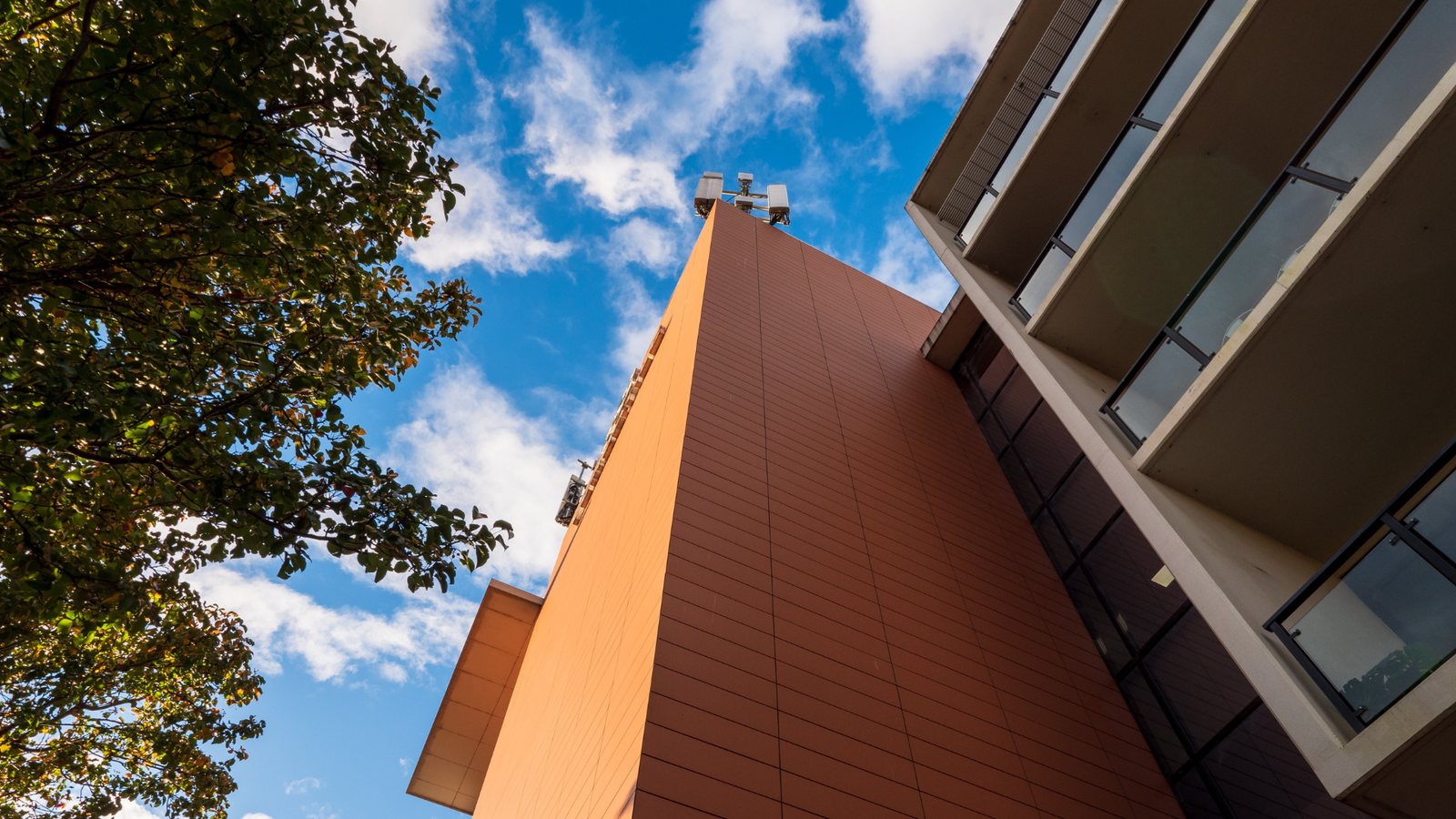
You cannot reliably identify the composition or fire risk of an external wall panel by colour or appearance alone. Two similar looking facades may use different products, cores, fixing methods and fire barriers. If your building's records are incomplete, a visual guess can create either false reassurance or unnecessary alarm.
This guide focuses on the first practical question: how an owner or strata manager can establish what is installed and who should assess it. For an overview of the broader issue, read Dapcor's existing combustible cladding in NSW guide.
Step 1: Gather the building's documents
Collect approved drawings, facade specifications, product schedules, construction and refurbishment records, certificates, previous inspection reports and any correspondence from council or Fire and Rescue NSW. Ask the strata manager, building manager, developer or previous facility manager for missing files. Note which elevations and floors are covered by the documents: a later extension or partial recladding may use another product.
Product names in drawings are a starting point, not proof of what was installed. Substitutions and later repairs can change an assembly. Keep a record of the version and date of each document so the assessor can compare it with the building.
Step 2: Check known notices and registration
Ask whether the building has received any cladding related correspondence from council, the NSW Cladding Taskforce, an insurer or a fire safety professional. Certain NSW buildings with external combustible cladding are subject to registration requirements; the applicable categories and obligations should be checked against NSW Government guidance. Do not assume that no notice means no issue.
Also check the building's current fire safety schedule and annual fire safety statement. They do not by themselves establish the panel composition, but they help a qualified assessor understand the existing fire strategy.
Step 3: Commission an appropriate assessment
A suitably qualified facade and fire safety team can review records, inspect the external wall and recommend sampling or testing where needed. The assessment should identify the installed product and its location, how the wall is assembled, and what risk the system presents in the context of the building. A sample from one location may not represent every elevation if products changed during construction or later repairs.
NSW Government guidance explains that the presence of external combustible cladding does not automatically establish that the building is a fire hazard. Its placement and the building's other fire safety measures matter. Equally, a panel labelled fire rated is not a substitute for assessing the complete installed assembly.
Step 4: Put immediate controls and decisions in writing
If the assessment finds a risk, agree on any interim measures with the relevant professionals and authorities. These could relate to site management, inspections or access, depending on the building and the advice received. Ask for a report that separates the evidence, risk assessment, recommended action and outstanding unknowns. A committee then has a basis to decide whether repair, partial replacement or a broader replacement project is required.
The next decision should consider approvals, design responsibility, occupant communication, insurance and cost. Dapcor's cladding repair versus replacement guide explains how scope choices differ once the existing system is understood.
Questions to ask the assessor
- What documents and physical samples support the product identification?
- Are different facade areas constructed differently?
- What is known about cavity barriers, fixings and penetrations?
- Which risks require action now, and which need further testing?
- What is the proposed approval and design pathway?
- What information should be shared with occupants and the insurer?
The key is an evidence based decision. Dapcor's cladding services in NSW cover the delivery stage once the technical scope is defined. If you are unsure where your building stands, contact Dapcor to discuss the available records and next steps.